Showing posts with label Non-Fiction. Show all posts

Friday, December 25, 2009

The Blind Side: Evolution of a Game by Michael Lewis

“In Lawrence Taylor’s first season in the NFL, no official records were kept of quarterback sacks. In 1982, after Taylor had transformed the quarterback sack into the turning point of a football game, a new official NFL statistic was born.”
– Chapter 1, pg. 14

“Michael Oher had a measured IQ of 80, which put him in mankind’s 9th percentile. An aptitude test he had taken in the eighth grade had measured his “ability to learn” and ranked him in the 6th percentile. The numbers looked like misprints: in a rich white private school, under the column marked ‘percentile,’ you never saw single digit numbers. Of course, logically, you knew such people must exist; for someone to be in the 99th percentile, someone else had to be in the 1st. But you didn’t expect to meet them at Briarcrest Christian School.” – Chapter 3, pg. 45

“Without uttering a peep, the kid had become the talk of the school. Everyone was frightened of him, until they realized that he was far more terrified of them.” – Chapter 3, pg. 57

“One of his more talented teammates, Joseph Crone, thought Michael Oher’s main contribution came before the game, when the opposing team stumbled out of their locker room or their bus, and took the measure of the Briarcrest Christian School. ‘They’d see all of us,’ said Crone, ‘and then they’d see Mike and say, oh crap.’” – Chapter 4, pg. 69

“Bill Walsh made the quarterback a lot more valuable, and so the man who protected the quarterback was going to be a whole lot more valuable, too. Whoever he was, he was going to have to be special.” – Chapter 5, pg. 113

“Leigh Anne snapped the family Christmas card picture and sent it out to several hundred friends and distant relatives, without it ever occurring to her that most of the recipients would have no idea about the strange new addition to the family. A few weeks later, the phone rang late one night. It was a North Carolina cousin. ‘All right,’ he blurted into the phone. ‘Who the hell is this black kid in y’all’s Christmas card?’” – Chapter 7, pg. 147

So those were some of my favorite book quotes from The Blind Side by Michael Lewis.

Two years ago, while watching the Super Bowl (don’t bother asking me who was playing or which team won), my guy friend told me about this book. He insisted that I would love it even though I didn’t know the first thing about
football (expect that it's not soccer). I humored him and continued to root for the team with the prettiest colors, cutest mascot or sexiest quarterback, not truly believing I could endure 300 pages of sports lingo. I ended up buying the book a few weeks later and stashing it under my bed until I heard Sandra Bullock was to star in the movie adaptation. Turns out my friend was right: I laughed, I cried, I laughed again, I went through ten boxes of Kleenex, and I actually learned a little bit about the invention of “the passing game” and how some guy named Lawrence Taylor is responsible for the increased interest in the left tackle position. I feel so well-rounded.

Thursday, November 26, 2009

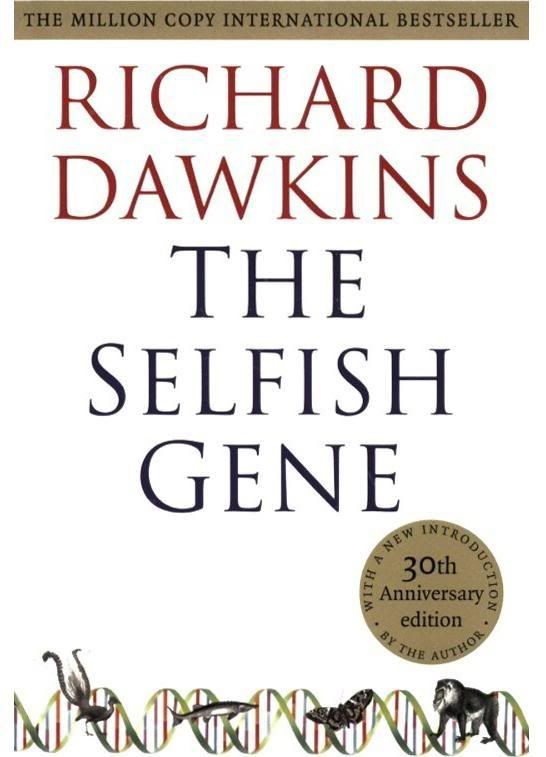
The Selfish Gene by Richard Dawkins

“Intelligent life on a planet comes of
age when it first works out the reason for its own existence. If superior creatures from space ever visit earth, the first question they will ask, in order to assess the level of our civilization, is: 'Have they discovered evolution yet?'”
– Chapter 1, pg. 1

“Be warned that if you wish, as I do, to build a society in which individuals cooperate generously and unselfishly towards a common good, you can expect little help from biological nature. Let us try to teach generosity and altruism, because we are born selfish. Let us understand what our own selfish genes are up to, because we may then at least have the chance to upset their designs, something that no other species has ever aspired to.” – Chapter 1, pg. 3

“Before the coming of life on earth, some rudimentary evolution of molecules could have occurred by ordinary processes of physics and chemistry. There is no need to think of design or purpose or directedness. If a group of atoms in the presence of energy falls into a stable pattern it will tend to stay that way. The earliest form of natural selection was simply a selection of stable forms and a rejection of unstable ones. There is no mystery about this. It had to happen by definition.” – Chapter 2, pg. 13

“Evolution is blind to the future.” – Chapter 9, pg. 162

“Replicators are no longer peppered freely throughout the sea; they are packaged in huge colonies - individual bodies. But the individual body, so familiar to us on our planet, did not have to exist. The only kind of entity that has to exist in order for life to arise, anywhere in the universe, is the immortal replicator.” – Chapter 13, pg. 266

So those were some of my favorite book quotes from The Selfish Gene by Richard Dawkins.

If it wasn’t copyright infringement, I would quote the entire second chapter of this book! Dawkins' argument for how life could have begun (without the help of divine intervention) is incredible! As an atheist, I do not base my morals or personal principles on anyone’s explanation of the origins of life. Jesus could have been wrong, just as Dawkins’ theory could be disproved in the years to come. Neither of these revelations will change how I act towards others or
feel about my own life. But the explanation provided in this book is exhilarating because it follows that humans are nothing – nothing but survival machines (to use Dawkins’ terminology) molded by natural selection and used by our egotistical genes for their own selfish propagation. How depressing! But oh, how liberating! To have no purpose in life (other than to house and spread our genes) is a scary thought, to be sure, but frees each of us from the shackles of some predetermined reason for existing. If you wish to make light of it all, you can thank Richard Dawkins for successfully reasoning that you are required to do no more in life than keep yourself alive and have sex!

Wednesday, November 25, 2009

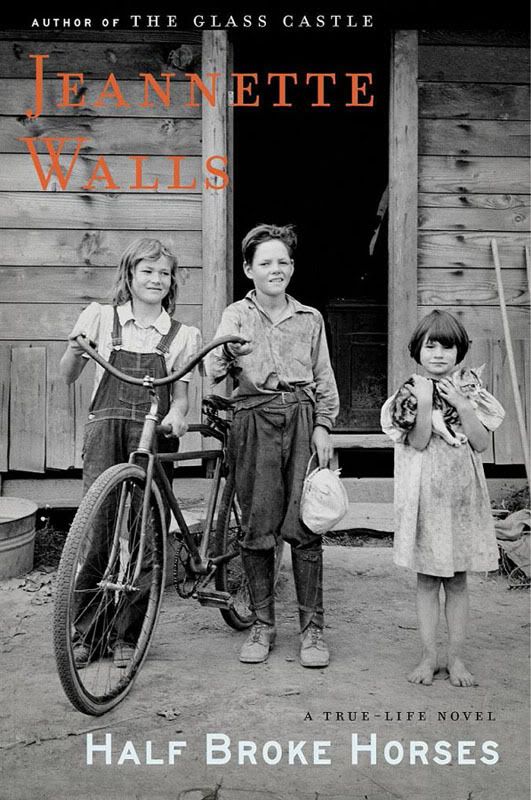
Half Broke Horses by Jeannette Walls

“She wore tight corsets to give her a teeny waist – I helped her lace them up – but they had the effect of causing her to faint. Mom called it the vapors and said that it was a sign of her high breeding and delicate nature. I thought it was a sign that the corset made it hard to breathe.” – Chapter 1, pg. 18

“I always figured horses are smarter than they let on. Kind of like the Indians who pretend they can’t speak English because no good ever came from talking with the Anglos.” – Chapter 1, pg. 22

“Mom hinted a couple of times that it was good I was going to college, since with one failed marriage behind me, I’d have trouble landing a good husband and would need something to fall back on. ‘A package that’s been opened once doesn’t have the same appeal,’ she said.” – Chapter 4, pg. 89

“When people kill themselves, they think they’re ending the pain, but all they’re doing is passing it on to those they leave behind.” – Chapter 5, pg. 113

“For the most part, pioneers and ranchers didn’t have the time or money for gift giving and tree trimming, and they tended to treat Christmas like Prohibition, another eastern aberration that wasn’t of much concern to them. A couple of years back, when some missionaries were trying to dazzle the Navajos into converting, they had a gift-bearing Santa Claus jump out of a plane, but his parachute didn’t open, and he landed with a thud in front of the Indians, convincing them – and most of the rest of us – that the less we had to do with jolly old Saint Nick, the better off we’d be.” – Chapter 6, pg. 176

“Anyone who thinks he’s too small to make a difference has never been bit by a mosquito.” – Chapter 8, pg.246

So those were some of my favorite book quotes from Half Broke Horses by Jeannette Walls.

I’m pleasantly surprised this book didn’t make me want to kill someone. Unlike The Glass Castle, I actually liked the main characters. (I think their hatred for Rex Walls might have had something to do with it). Perhaps, this time around, I was mentally prepared for the author’s exaggerations.
However, what's up with the contradictory statement on the cover? A true-life novel? That makes sense. Walls even admits in the acknowledgments that she never talked to her grandmother. Instead, her mom was "so very unfailingly generous with her stories, memories and observations.” Or, in other words, Rose Mary made up a bunch of crap that wasn’t true and Jeannette used it to write another “interesting woman” story where she could throw in the book’s title about a half a dozen times. I do love her sense of humor though. Plus, it was a very quick read. Just steer clear if you are of Mormon faith – there is a good chance you might be offended.

Friday, September 11, 2009

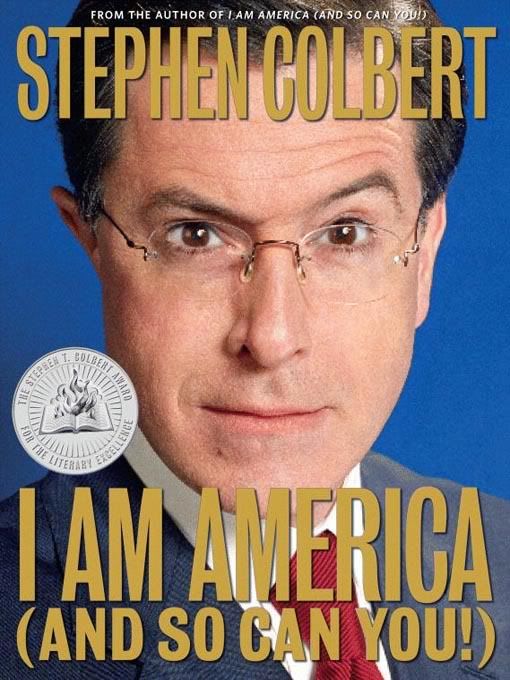
I Am America (And So Can You!) by Stephen Colbert

“Just because I haven’t put a lot of thought into this book doesn’t mean that you shouldn’t. What I have dictated is nothing less than a Constitution for the Colbert Nation. And, like our Founding Fathers, I hold my Truths to be self-evident, which is why I did absolutely no research.”
– Introduction, pg. ix

“We are at war. And I’m not talking about the war in Iraq, the war in Afghanistan, or the war on drugs. I’m talking about a war with higher stakes than all of those other wars combined and then divided by three.” – Chapter 1, pg. 5

“There’s more to being a father than taking kids to Chuck E. Cheese’s and supplying the occasional Y-chromosome. A father has to be a provider, a teacher, a role model, but most importantly, a distant authority figure who can never be pleased. Otherwise, how will children ever understand the concept of God?” – Chapter 1, pg. 7

“If a butterfly flaps its wings in one part of the world, it could cause people at the opposite end of the globe to watch a Discovery Channel special on butterflies.” – Chapter 4, pg. 47

“A recent survey published in the American Sociological Review revealed that atheists are the least trusted group in America – less trusted, even, than homosexuals. It makes sense – at least we trust the homosexuals with our hair.” – Chapter 4, pg.61

“Every society has its own class structure with a unique number of classes. India has one of the most rigid and complex class structures. Based upon their behavior in past lives, all Indians are born into different stratas of society called 'castes.' These castes forever determine what level of tech support questions they are allowed to answer.” – Chapter 11, pg. 162

So those were some of my favorite book quotes from I Am America (And So Can You!) by Stephen Colbert.

I advise against reading this in a public place – I honestly laughed out loud at least a dozen times! I freaking love this man’s show. Although, someone from Charter needs to address the fact that my DVR records repeats of the Colbert Report even after I program it to only record new episodes. Perhaps my cable
company has a deal with Comedy Central? At any rate, it’s funny how you can practically hear Stephen saying the words in your head as you read them. There were some parts of his book that were rather dull, but I think I’ll attribute this to having read the entire thing in one sitting. You can only take so much comedy in a twenty-four hour period. Perhaps this is the reason his show is only thirty minutes long? Still, Colbert brings the satirical genius. As said by an anonymous reviewer on Amazon: "If I had a womb and the other necessary parts, I would offer to bear Stephen Colbert's children because America needs more people like him." Amen.

Saturday, January 24, 2009

My Friend Leonard by James Frey

“Sometimes I talk to the paintings, to the figures in the paintings. I ask a farmer how’s the weather, I ask a singer what’s the song, I ask a baby what’s your name, I ask a young woman why are you crying? I stand in front of Vincent’s self-portrait. Vincent who knew pain and failure, who knew self-doubt and insanity, who cut off his ear, who shot himself. I know Vincent well. I have nothing to say to him.”
– Chapter 17, pg. 95

“I meet a man at a bar while I’m waiting for my friends. He says he’s forty-five, he looks like he’s twenty-five. I ask him if he has a secret he says never get angry and be as immature as you can for as long as you can get away with it. A man sitting next to him laughs and says that's bullshit, the great secret is eat food and drink beer till you drop.” – Chapter 19, pg. 105

“There is peace in pain so overwhelming that it shuts down all feeling. It is the only peace I know.” – Chapter 20, pg. 106

“It takes a brave man to walk away, to care so much that he doesn’t care about anything else, to be willing to obey what he feels inside, to be willing to suffer the consequences of living for himself.” – Chapter 25, pg. 129

“The bars are filled with beautiful young people. It’s as if the three best-looking people from every town in the country have come to Los Angeles. Everyone wants to be famous, everyone is well-connected. Everyone is just a step or two away they’re waiting for that break it’s almost there they can taste it fucking taste it.” – Chapter 50, pg. 220

“Leonard asks me if there’s anything I need to know before he dies, I think about it for a minute, turn to him, say what’s the meaning of life, Leonard? He laughs, says that’s an easy one, my son, it’s whatever you want it to be.”
– Chapter 91, pg. 336

So those were some of my favorite book quotes from My Friend Leonard by James Frey.

I regret reading this. Damn sequels. I was happy thinking Frey had managed to overcome his addictions all by himself. But no, he had Leonard (the leader of an organized crime operation), who spoiled him with steak dinners, Picasso paintings, courtside basketball seats… you name it. Then tops it all off by leaving Frey a massive amount of money (does he really expect us to believe
he turned it down?). I think having a sugar daddy like Leonard would get anyone through the post-rehab blues. Too bad Frey himself admits there’s not much truth to his memoirs. I’m starting to feel like running through my local Borders with a big, fat Sharpie (the cool, clickety-click retractable kind) and crossing out the word “memoir” anywhere I see it. When did society decide ‘based on a true story’ wasn’t good enough? Oh well. I’m just surprised his repeated omission of punctuation (same as the first book) didn’t bother me too much. Maybe I read so fast my mind puts the periods and commas in for me? I’d make a terrible editor.

Friday, January 23, 2009

A Million Little Pieces by James Frey

“I am an alcoholic and a drug addict
and a criminal. I am worse than I have ever been in my life. I am in a clinic somewhere in Minnesota. I want to drink and I want to smoke crack even though I know drinking and smoking crack are killing me. I am alone. If I leave the clinic my family and my remaining friends will write me off. I hate myself so much that I can’t look myself in the eye. I hate myself so much that suicide seems like a reasonable option. I have destroyed every meaningful relationship I’ve ever had. I am vomiting for the seventh time today. The seventh fucking time. I can't do this anymore. I cannot continue to live this way. I cannot continue to live this way.” – Chapter 7, pg. 70

“I have been to AA meetings and I find their philosophy to be one of replacement. Replacement of one addiction with another addiction. Replacement of a chemical for a God and a meeting. There is no higher power or any God who is responsible for what I do and for what I have done and for who I am. There is no higher power or any God who will cure me. There is no meeting where any amount of whining, complaining and blaming is going to make me feel any better.” – Chapter 7, pg. 70

“Though they function as human beings, they function because of their meetings and their dogma and their God. Take away their meetings and their dogma and they have nothing. Take them away and they are back where they started. They have an addiction. Addictions need fuel. I am not convinced meetings and a dogma and a God can fuel mine. If joining AA is the only way to cure me, then I’m completely fucked.” – Chapter 7, pg. 72

“Addicts, as a group, generally score far above average on intelligence tests. I guess maybe we’re smart enough to have figured out how shitty things are and we decide addiction is the only way to deal with it.” – Chapter 10, pg. 149

“I don’t believe that addiction is a disease. Cancer is a disease. It takes over the body and destroys it. Addiction is not a disease. Not even close. Diseases are destructive medical conditions that human beings do not control. It cannot be dealt with using a group or a set of steps. It cannot be dealt with by talking about it. Addiction is a decision. It is a difficult one to make, but it is still a decision.” – Chapter 15, pg. 291

So those were some of my favorite book quotes from A Million Little Pieces by James Frey.

Frey did not disappoint. I was expecting him to pull a 180 on me and accept the AA bullshit. Instead, he stayed atheist and did better than all those lame Twelve Steppers combined. I really like his outlook on addiction and how he
says it’s not a disease, but a choice. The idea that AA is replacing one addiction with another is great. He's totally right. As for the whole Smoking Gun/Oprah controversy: I could care less if Lily slit her wrists instead of hanging herself (I'm just glad she's dead), or if the amount of time Frey spent in jail wasn’t actually three months, or if he didn’t really hit a police office with his car. You mean to tell me everything in a memoir must be 100% true? Because I’ve got a feeling that oxford shirt he borrowed from Warren was blue, not white (Gasp!). If anything, we should be concerned about Jeanette Wall’s memoir. Now there’s an author who has obviously lied to us.

Saturday, January 17, 2009

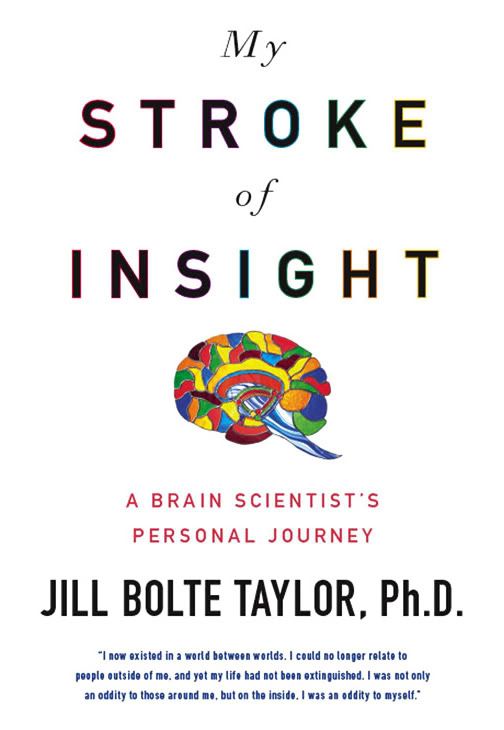
My Stroke of Insight: A Brain Scientist's Personal Journey by Jill Bolte Taylor

“Everything in my visual world blended together, and with every pixel radiating energy, we all flowed en masse, together as one. It was impossible for me to distinguish the physical boundaries between objects because everything radiated with similar energy. It’s probably comparable to when people take off their glasses or put eye drops into their eyes – the edges become softer.” – Chapter 7, pg. 69

“In this shifted perception, it was impossible for me to perceive either physical or emotional loss because I was not capable of experiencing separation or individuality. Despite my neurological trauma, an unforgettable sense of peace pervaded my entire being and I felt calm.” – Chapter 7, pg. 70

“Recovery is often derailed by hopelessness.” – Chapter 11, pg. 95

“Peace is only a thought away, and all we have to do to access it is silence the voice of our dominating left mind.” – Chapter 13, pg. 111

“Feeling deep inner peace and sharing kindness is always a choice. Forgiving others and forgiving myself is always a choice. Seeing this moment as a perfect moment is always a choice. I’ve often wondered, if it’s a choice, then why would anyone choose anything other than happiness?”
– Chapter 19, pg. 172

“Knowing that I am a part of the cosmic flow makes me feel innately safe and experience my life as heaven on earth. How can I feel vulnerable when I cannot be separated from the greater whole? My left mind thinks of me as a fragile individual capable of losing life. My right mind realizes that the essence of my being has eternal life. Although I may lose these cells and my ability to perceive this three-dimensional world, my energy will merely absorb back into the tranquil sea of euphoria. Knowing this leaves me grateful for the time I have here as well as enthusiastically committed to the well-being of the cells that constitute my life.” – Chapter 19, pg. 160

So those were some of my favorite book quotes from My Stroke of Insight: A Brain Scientist's Personal Journey by Jill Bolte Taylor.

Basically, this smart-as-hell Harvard brain scientist has a stroke (irony at its best). A malformed blood vessel ruptures and screws up the part of her brain responsible for discerning the physical boundaries of where our bodies end
and the rest of the world begins (this part is called the orientation-association cortex or OAC). She tries to describe what this feels like, giving the expression ‘at one with the universe’ a whole new meaning. I really like this idea: We are nothing more than our cells, which are nothing more than molecules, which are nothing more than atoms, which all spin with similar energy in this place we call the universe. Our cells actually have to trick us into believing there are boundaries that separate “us” from everything else. In fact, a whole part of our brain is dedicated to this trickery. Who knew! Now my lack of coordination makes sense. I blame my OAC.

Monday, December 29, 2008

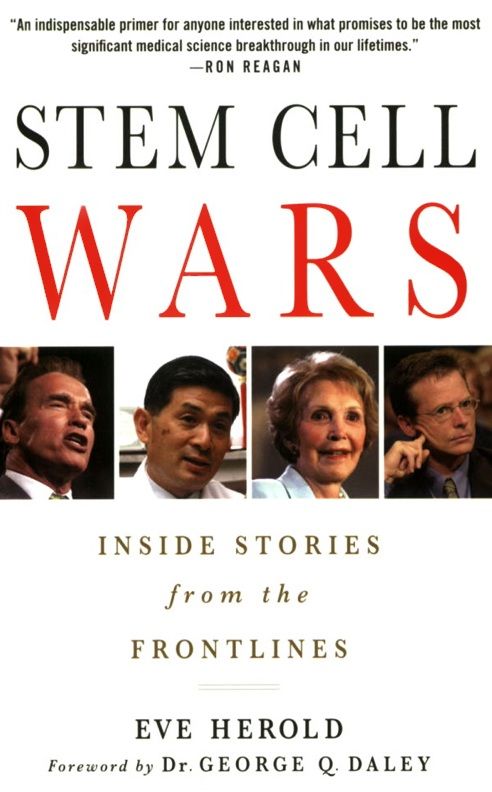
Stem Cell Wars: Inside Stories from the Frontlines

“If ‘round one’ for modern medicine was the eradication of infectious diseases, then we are close to claiming victory, at least in the industrialized world (with the major exception of AIDS). Now that most of us live long enough to develop a chronic, degenerative disease, ‘round two’ will no doubt consist of the effort to conquer disease at the cellular level. And up until the last few years, we were nowhere close to being able to do that.” – Chapter 1, pg. 12

“It simply isn’t possible to identify beauty queens or NFL athletes in the Petri dish.” – Chapter 2, pg. 35

“Oddly enough, in today’s strange political climate, no one is objecting to the fact that 84% of fertility clinics dispose of unused embryos, but the fight to keep them from being used to find cures for disease is ferocious.” – Chapter 2, pg. 37

“No matter how you slice it, a firm majority of Americans want to see all types of stem cell research go forward with more backing from their government. How is it possible that year after year, the clear will of the majority is ignored, while a small majority is able to dictate policy to the rest of the nation?” – Chapter 4, pg. 68

“They’ve reversed paralysis in rats, but I’m afraid we’re going to be walking on Mars before people like Susan walk here on earth. How can these politicians allow needless suffering because they care more about cells in a dish than they do about people like her?” – Chapter 6, pg. 104

“Every cell of our bodies contains a complete set of chromosomes, and if inserted into an egg cell and implanted into a womb, could grow into an entire person. Yet we don’t hold mass funerals every time we wash our hands or comb our hair, shedding thousands of these cells. Nor do we regard the act of taking a shower as a holocaust in which millions of mini-people are washed down the drain.” – Chapter 7, pg. 135

“In a world where a large number of children are abused, orphaned, or abandoned by their parents, should we be pouring so much of our energy into a fight to ‘save’ theoretical humans that have no realistic possibility of ever existing?”
– Chapter 7, pg. 137

So those were some of my favorite book quotes from Stem Cell Wars.
What makes me angry is that pro-life activists want us to believe
that stem cell harvesting and abortions are one and the same. But they aren't. Embryos used for research are created in the lab and have never (nor will ever) see the inside of a womb. Even more annoying is when people say ‘life begins at conception’, because this implies we are only our genes. What about identical twins? Chimeras? Herold mentions that scientists are discovering a much higher percentage of us had a fraternal twin in our mother’s womb than previously believed. He/she dissolved and we absorbed some of their cells. Awesome, right?

Sunday, December 21, 2008

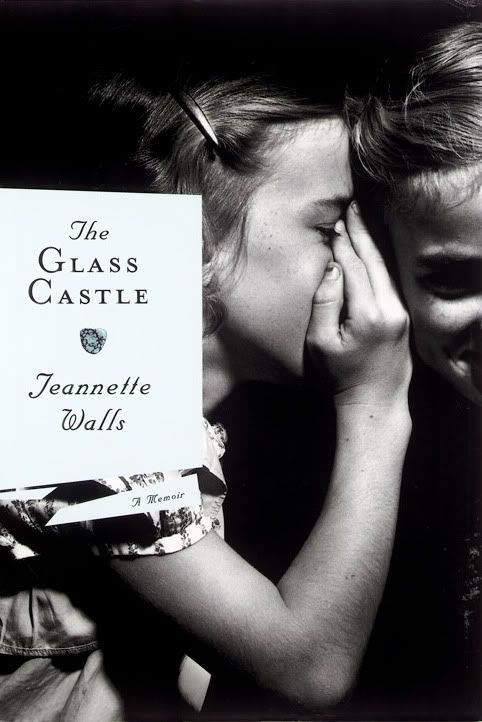
The Glass Castle by Jeannette Walls

“I wondered if the fire had been out to get me. I wondered if all fire was related, like Dad said all humans were related, if the fire that had burned me that day while I cooked hot dogs was somehow connected to the fire I had flushed down the toilet and the fire burning at the hotel. I didn’t have the answers to those questions, but what I did know was that I lived in a world that at any moment could erupt into flames. It was the sort of knowledge that kept you on your toes.” – Chapter 2, pg. 34

“We laughed about all the kids who believed in the Santa myth and got nothing for Christmas but a bunch of cheap plastic toys. Years from now, when all the junk they got was broken and long forgotten, we would still have our stars.” – Chapter 2, pg. 41

“The baby went without a name for weeks. Mom said she wanted to study it first, the way she would the subject of a painting. We had a lot of arguments over what the name should be. I wanted to call her Rosita, after the prettiest girl in my class, but Mom said that name was too Mexican. I told her we weren’t supposed to be prejudiced. She responded that it wasn’t being prejudice, but that it was a matter of accuracy in labeling.” – Chapter 2, pg. 46

“The few teachers the town did have were not exactly the pick of the litter, as Dad liked to say, and despite the shortage, one would get fired from time to time. A couple of weeks earlier, Miss Page had gotten the ax when the principal caught her toting a loaded rifle down the school hall. Miss Page said all she wanted to do was motivate her students to do their homework.”
– Chapter 2, pg. 73

“I just stood there looking from one distorted face to another, listening to this babble of enraged squabbling as the members of the Walls family gave vent to all their years of hurt and anger, each unloading his or her own accumulated grievances and blaming the others for allowing the most fragile one of us to break into pieces.” – Chapter 4, pg. 276

So those were some of my favorite book quotes from The Glass Castle by Jeannette Walls.

I spent the entire 288 pages fuming mad. I absolutely hate Rose Mary and Rex Walls. They had me wishing I lived in the type of country where I could get away with first degree murder (since this is a memoir and they are real people I actually want to shoot). I don’t know if you can get in trouble for saying something like that on the internet, but I guess it really doesn’t matter since Rex died of a heart attack and Rose Mary is currently homeless on some
street in New York (although, I doubt that is still the case now that her daughter's book has sold more than 2.5 million copies). I get why people love it so much – one unbelievable story after another. But if you ask me, the stories were too unbelievable. Maybe I just can't stand reading about dysfunctional families. I strongly believe people who contribute nothing to society (and then leech off of that society) should be shot. And alcoholic fathers who can't feed their own children (leaving them to eat a sugared stick of butter) should be waterboarded first and then shot. At the very least, reading about Jeannette’s parents sure made me appreciate my own.

Friday, September 12, 2008

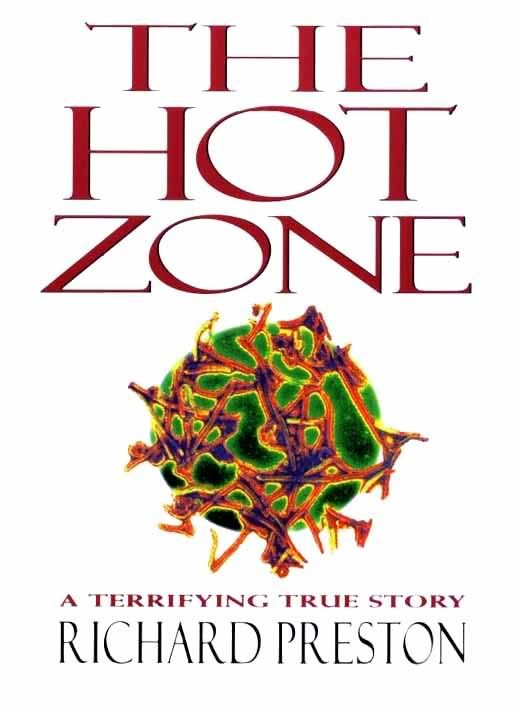
The Hot Zone by Richard Preston

“The sick monkeys were put in boxes and shipped out to a small island in Lake Victoria, where they were being released. With so many sick monkeys running around, the island could have become a focus for monkey viruses. It could have been a hot island, an isle of plagues. Epidemiologists have since discovered that the northwestern shore of Lake Victoria was one of the initial epicenters of AIDS. Did HIV crash into the human race as a result of the monkey trade? Did AIDS come from an island in Lake Victoria? A hot island? Who knows. When you begin probing into the origins of AIDS and Marburg, the light fails and things go dark, but you sense hidden connections.” – Chapter 3, pg. 29

“Ebola does things to people that you do not want to think about. The organism is too frightening to handle, even for those who are comfortable and adept in biohazard suits. Many do not care to do research on Ebola because they do not want Ebola to do research on them.” – Chapter 5, pg. 45

“The classic Ebola face made the test monkeys look as if they had seen something beyond comprehension. It was not a vision of heaven.”
– Chapter 6, pg. 55

“The workers at Reston had had symptom-less Ebola virus. Why didn’t it kill them? A tiny difference in the virus’s genetic code had apparently changed its effects tremendously in humans. And if it should mutate in some other direction… Imagine a virus with the infectiousness of influenza and the mortality rate of the black plague. The Level 4 strain could turn into a cough and take out the human race.” – Chapter 28, pg. 254

“In a sense, the earth is mounting an immune response against the human species. It is beginning to react to the human parasite, the flooding infection of people, the dead spots of concrete all over the planet. Nature has interesting ways of balancing itself. Perhaps AIDS is the first step in a natural process of clearance.” – Chapter 31, pg. 287

“Ebola seemed to vanish off the face of the earth – but viruses never go away, they only hide.” – Chapter 31, pg. 291

So those were some of my favorite book quotes from The Hot Zone by Richard Preston.

Holy crap. This book is insane! The first chapter is ridiculously unsettling. I may never look at the person sitting next to me on a flight the same way. Remind me not to visit Reston, Virginia (and screw Africa). The way Preston describes the effects of Ebola and Marburg makes your stomach turn (think black vomit and liquefied organs). My virology teacher advised me not to read this book before bed, or risk nightmares about virus-infected bats. I think one Amazon reviewer put it best – WARNING: DO NOT EAT SPAGHETTI WITH RED SAUCE AFTER READING THIS BOOK. YOU WILL REGRET IT. But just like you can’t stop watching a horror movie once it has started, you can’t stop reading this book. And in the typical fashion of Freddie and Jason, these viruses have set themselves up for a sequel. Preston definitely leaves you
with the feeling that we are one plane ride away from a Stephen King-esque type of situation. Call it sensationalist spin, but an author capable of getting the general public to read a book that contains the phrase 'transmission electron microscope' gets my seal of approval. I'm more interested in his speculation on the origins of HIV. It would be horrific if the deaths of 25 million people resulted from the actions of one man (a rich monkey trader). Although, this seems unlikely because I recall the virus originating much earlier than the 1960's. Perhaps his theory is outdated. I keep forgetting this book was written back in 1994!

Saturday, January 26, 2008

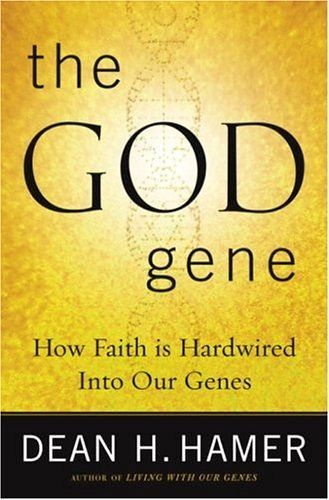
The God Gene: How Faith is Hardwired into our Genes by Dean Hamer

“I believe our genetic predisposition for faith is no accident. It provides us with a sense of purpose beyond ourselves and keeps us from being incapacitated by our dread of mortality.” – Chapter 8, pg. 143

“Historically, each time religious controversy has touched science, it has been burned. In the sixteenth century, the church taught that the sun circled the earth; astronomy proved it to be the other way around. In the seventeenth century, infectious diseases were seen as punishments by god; microbiology taught us their true origin. In the nineteenth century, spontaneous generation was accepted dogma; it took Pastuer to show that life comes only from life. A literal reading of the Bible teaches that the universe, the earth, and all its flora and fauna, were formed in six days just a few thousand years ago, that man was created in the image of God. Scientific evidence, on the other hand, shows that the universe was created billions of years ago, that life gradually arose by the process of evolution, and that humans have evolved from other species.”
– Chapter 11, pg. 209

“Science can tell us whether there are God genes, but not whether there is a God.” – Chapter 11, pg. 211

So those were some of my favorite book quotes from The God Gene.
I don’t have many because this book was disappointing. When an


author admits his own title is misleading, you know something is sketch. He probably figured the book would have flopped if it had been called Spirituality Monoamines. The atheist in me just can’t wait for scientists to study the VMAT gene’s protein further and decide Hamer’s studies are irreproducible. Didn’t the same thing happen when some harebrained scientist reported a genetic link to male homosexuality on the X chromosome? Wait, now who was that harebrained scientist? Oh, that’s right. Dean Hamer.

Monday, September 17, 2007

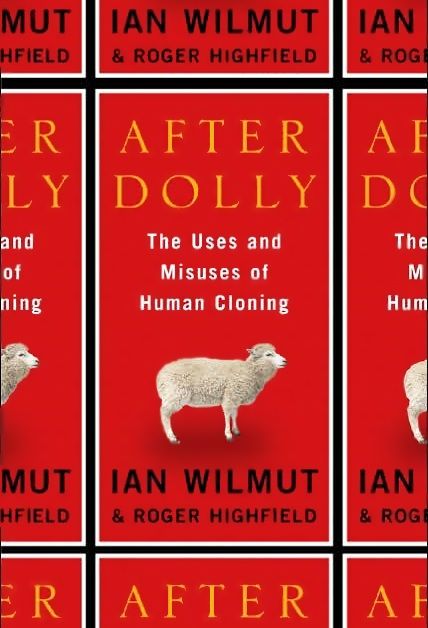
After Dolly: The Uses and Misuses of Human Cloning by Ian Wilmut

“My vision faces stiff opposition. Many people will fight any proposal to create embryos. Many will object to any use of embryos in research. But I feel it is best to say what I think, rather than what people would like to hear.”
– Chapter 1, pg. 33

“Genes are not as powerful as people think. Genetic identity is not the same as personal identity, and selves, unlike cells, cannot be cloned.”
– Chapter 1, pg. 41

“Medical advances have continued to lower the age at which premature babies can be helped to survive, so that in one part of a hospital doctors can struggle to save a twenty-two-week-old fetus and in another they can terminate it.”
– Chapter 6, pg. 201

“Since we know that a morally important person may eventually emerge (a substantial proportion of early embryos–some estimates put it as high as 50 percent–are naturally lost before term), I think it is appropriate to accord a gradually increasing moral status to the embryo or fetus, tempered by the recognition that if there is a ‘threshold of personhood’ there will always be argument about where it lies.” – Chapter 6, pg. 202

“A blastocyst can split into two (as happens naturally to produce twins) and recombine again. Did ‘life’ in such a case begin as an individual, become two individuals, and then turn into a singleton again?” – Chapter 6, pg. 208

“We are all potentially dead, but that does not mean we should be treated as if we are dead.” – Chapter 6, pg. 208

“Even when the technologies of nuclear transfer, genetic manipulation, and stem cells have matured, I am sure that some people will still prefer to put up with the random insults of nature than be subject to human intervention, even if it is based on careful consideration of medical issues rather than a whim.” – Chapter 9, pg. 275

“I want to be able to change my destiny rather than be condemned to a particular fate. I want people to have new options when it comes to that most fundamental urge to bring healthy children into this world. For me, the widespread use of genetic and reproductive technologies is not a step backwards into darkness, but a step forward into the light.”
– Chapter 9, pg. 275

So those were some of my favorite book quotes from After Dolly.

I think a lot of people don’t understand the process of cloning. And how ridiculous is it that those same people can vote on nuclear transfer issues? It’s
simple: you take an egg cell (like a sheep ovary), remove the haploid DNA from it, insert adult diploid DNA (i.e. from the mammary glands of a sheep), shock the egg cell into dividing, transfer to a surrogate mother and voila! Instant Dolly. I agree with Wilmut though, cloning a sheep for the sake of cloning is one thing – cloning a human would be pointless (not to mention cruel). There are too many goddamn people in this world! We need to figure out ways to get rid of them, not make more.